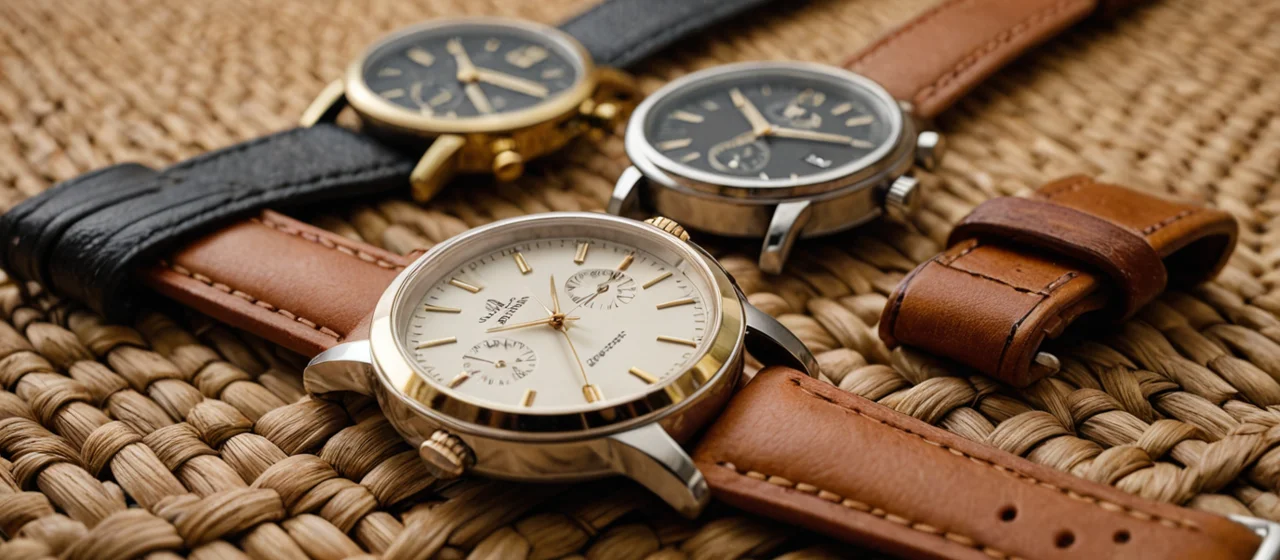
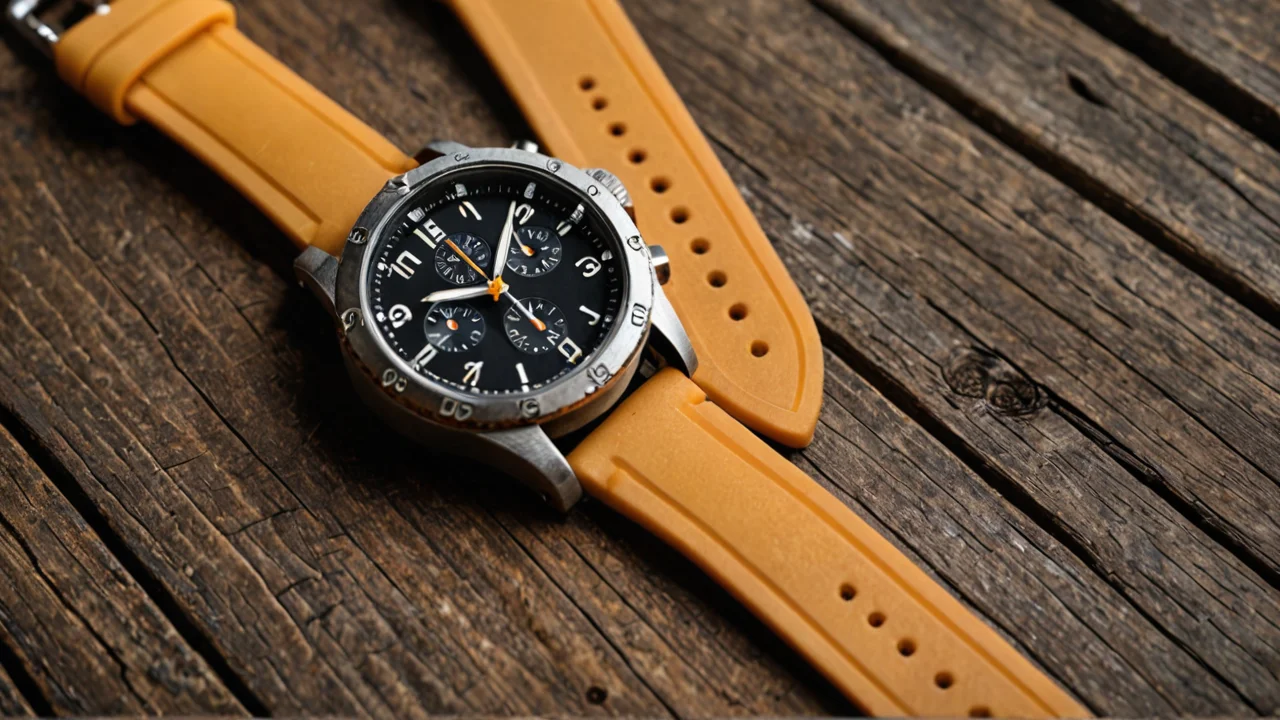
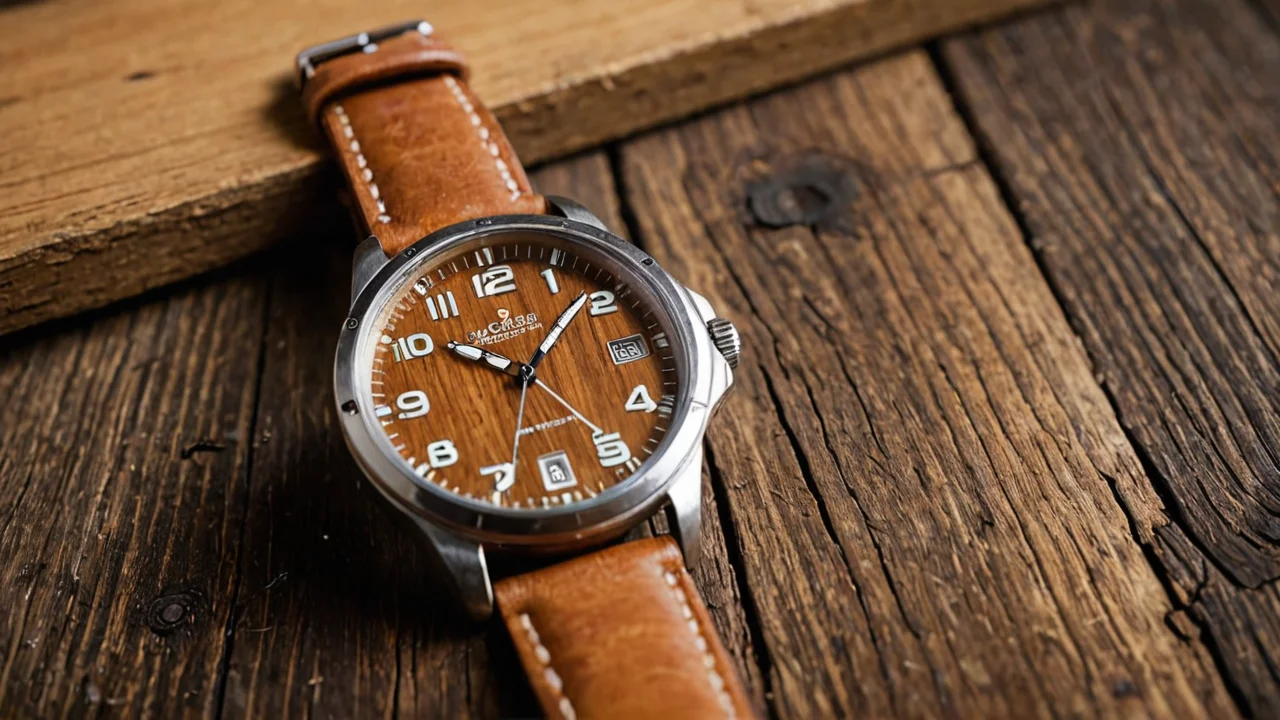
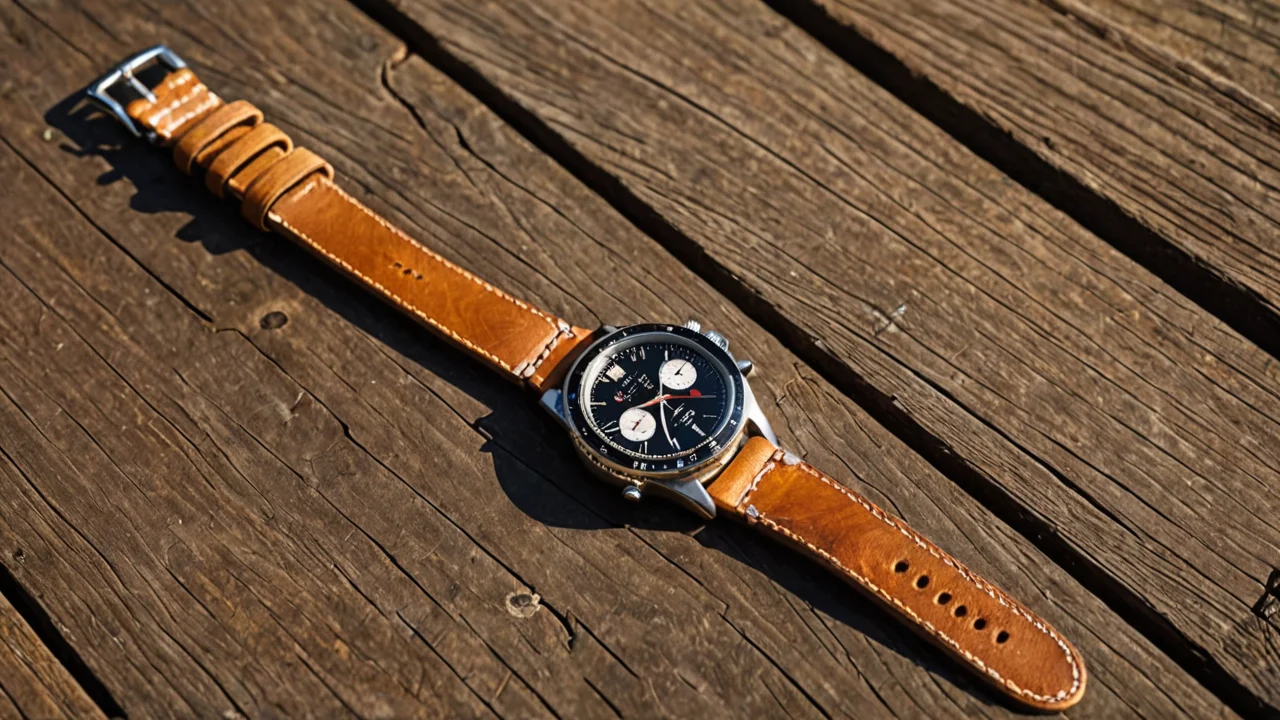
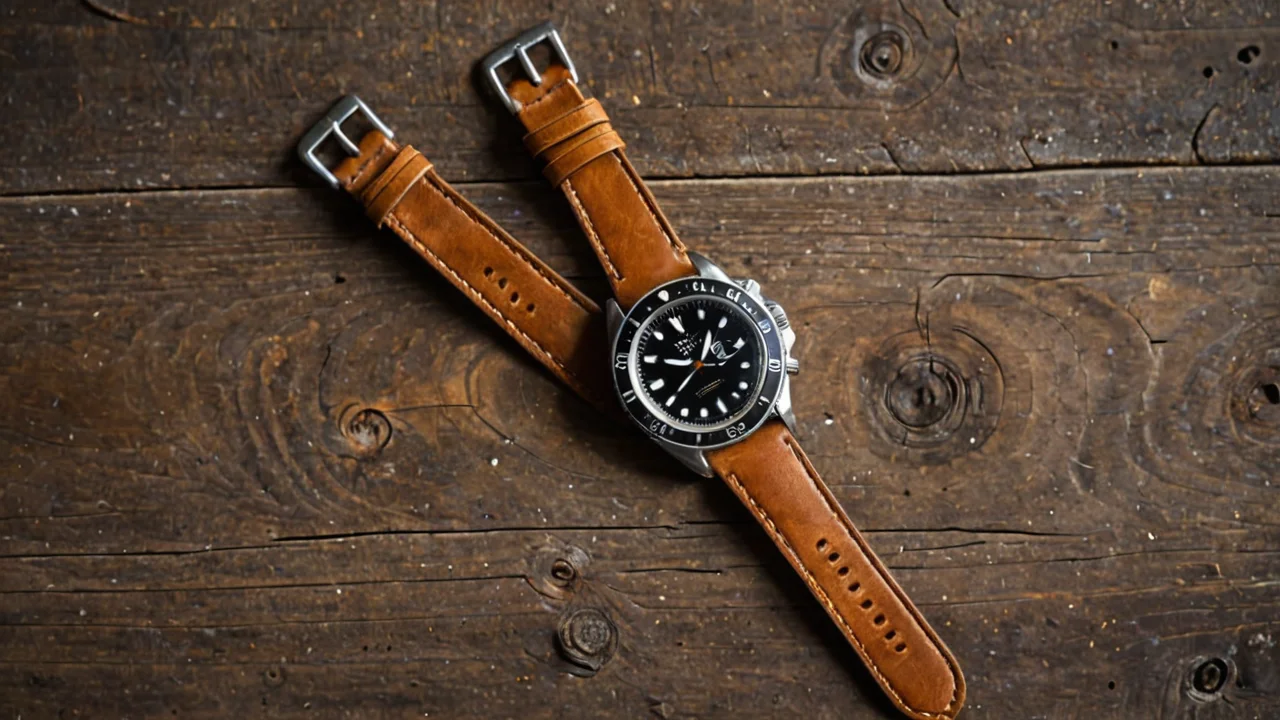
Strap material determines how a watch wears, how long it lasts, and whether it stays on your wrist at depth — and the order of decisions is fixed: match the material to the environment first, then to the lug geometry and spring bar setup, then to the look you want. Choose in the other order and you end up with a stainless bracelet on a watch whose spring bars can't take the load, or a leather strap on a dive watch that will be soaked weekly.
Match the material to the environment, not the watch's marketing category
A leather strap is the wrong choice on any watch that will be submerged, regardless of whether the watch itself is rated for it. The watch's water resistance and the strap's water tolerance are separate specifications, and the strap almost always loses that argument. A dive watch — defined as having water resistance greater than 1.1 MPa (11 atm), equivalent to at least 100 m (330 ft) — can pass every pressure test and still come back from a beach holiday with a strap that has dried stiff, cracked at the buckle holes, and started to smell. The watch was fine. The strap wasn't.
So work from what the watch will actually see. Salt water, chlorinated pools and daily showers all point away from leather and toward rubber, silicone, or a steel bracelet with solid end links. Freshwater swimming is slightly kinder but still rules out untreated leather over time. Sweat is the quiet killer — a leather strap worn daily through a hot summer absorbs it, and the failure shows up first as discoloration at the lug end, then as a crack that starts at the spring bar hole rather than the buckle. If you see that crack, the strap is done; leather does not recover from a wet-and-dry cycle once the fibres have separated.
There is a real cost to this discipline. Rubber and silicone are the correct answer for water and sweat, and they are the least interesting materials to look at. A steel bracelet is durable and water-tolerant but heavy, scratches at the clasp, and on a lighter watch can make the whole thing feel unbalanced. Leather and canvas look best and are the most fragile. Nobody gets all three properties at once, which is why the sensible default for anyone with more than one watch is two straps per watch rather than one compromise.
ISO 6425 explains why dive straps fail before dive watches do
An ISO 6425 divers' watch is required to withstand diving at depths of at least 100 m and to pass specific tests for water resistance, overpressure, legibility in darkness, shock resistance and other performance criteria. Those tests are run on the watch, not on whatever strap the owner fits afterwards. The verification pressure is 125% of the rated depth: a 100 m watch is tested at 125 m equivalent static pressure, and a 300 m-rated ISO 6425 diving watch is tested at 375 m of static water (37.5 atm). Routine simulated immersion for these watches involves 100 m of water for 1 hour per day, followed by 3 m of water for 3 hours per day.
Now consider what a strap experiences under the same conditions. A spring bar is a thin steel pin held in a lug hole by friction and a shoulder. In a rubber strap, the bar sits in a moulded recess that spreads load across the strap width; in a leather strap, the same bar bears on a punched hole in a piece of treated hide that has just spent an hour wet. The watch has been engineered to a published standard. The strap has been engineered to a price. That asymmetry is why the strap is the component that fails first on a dive watch, and why the spring bar — not the material — is often the true weak point.
The practical consequence: on any watch that genuinely gets wet, fit a strap whose attachment does not depend on a wet leather hole, and check the spring bars themselves. Thicker bars with a wider shoulder hold better in worn lug holes; quick-release spring bars are convenient but introduce a small lever that can catch on a wetsuit sleeve. If the watch is rated well past what you'll ever do with it, the rating is not the thing to optimise — the attachment is.
The five materials and what each one actually costs you
There are five families worth knowing: leather, rubber and silicone, steel and other metals, woven textile, and the newer synthetics. Each has a failure mode you can recognise before it strands you.
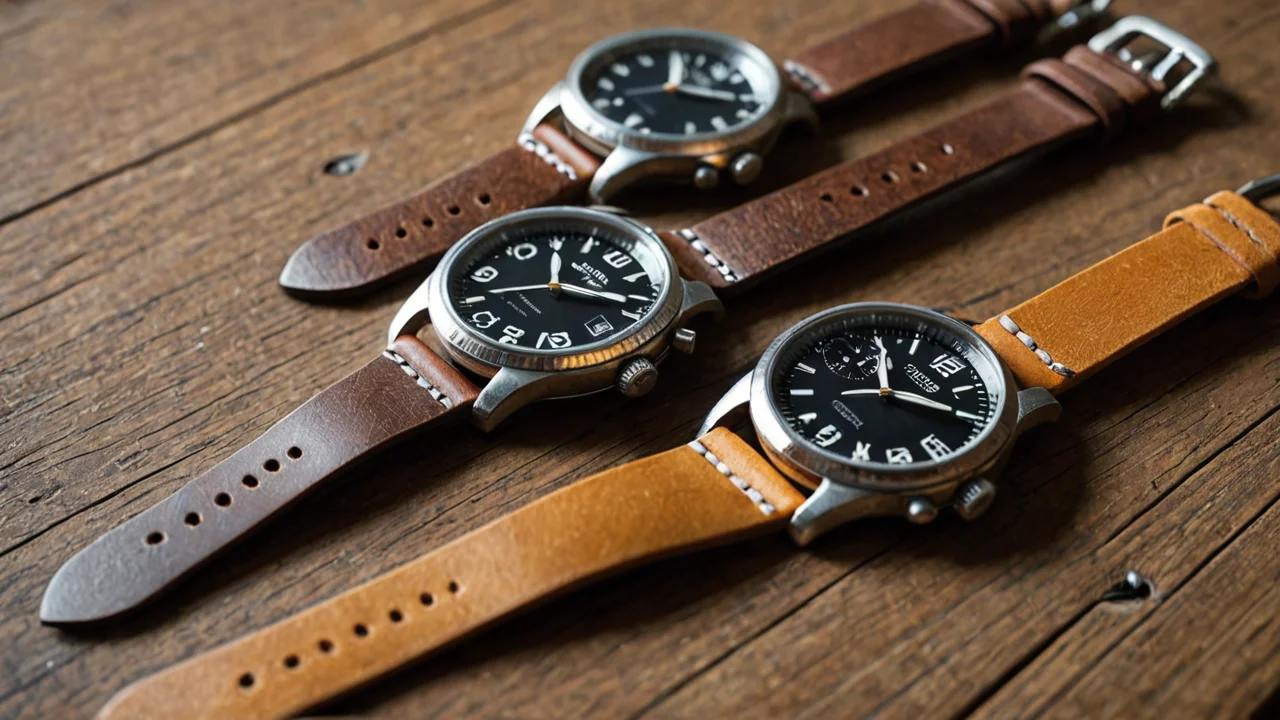
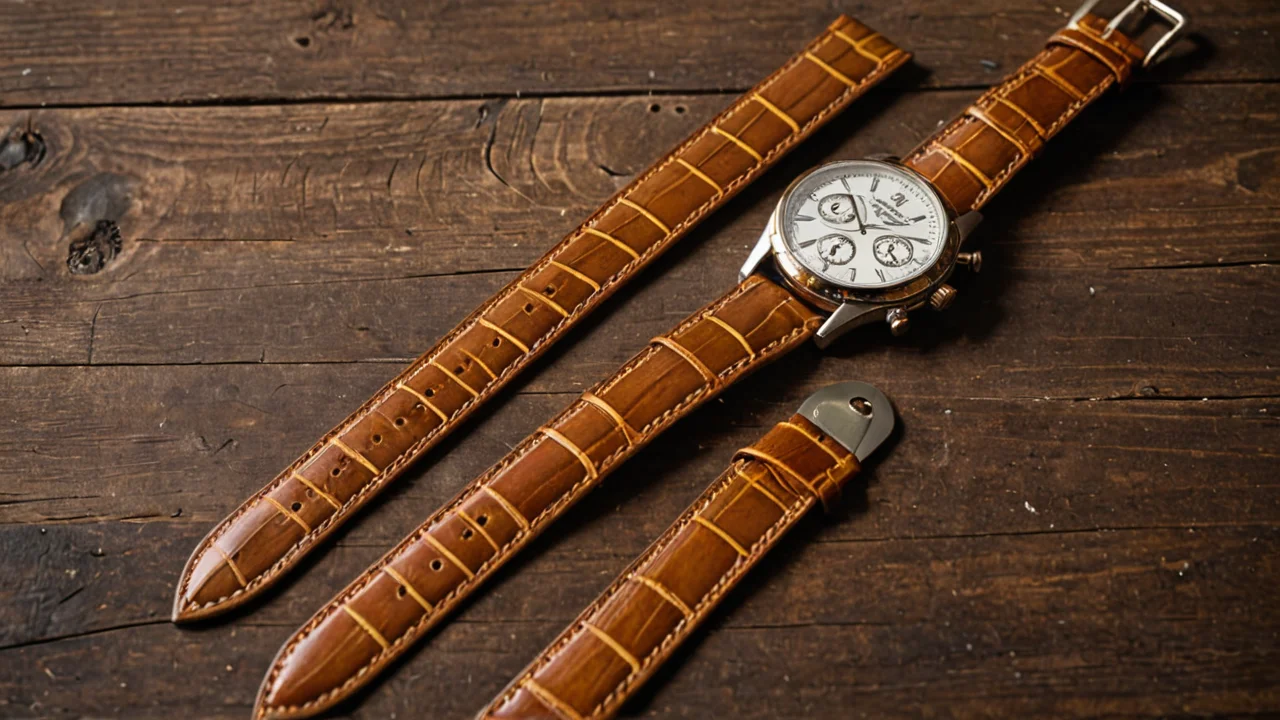
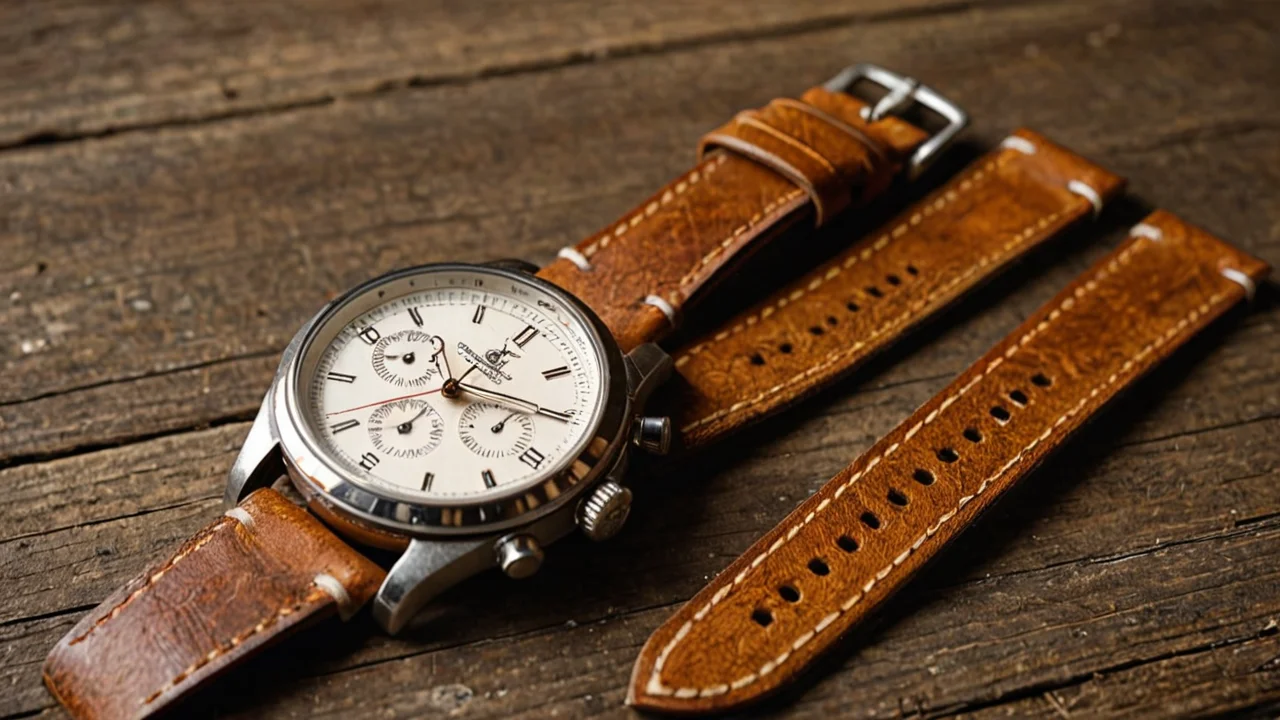
- Leather. Looks best, ages best, tolerates water worst. Sweat and immersion cause the fibres to swell and separate; the first sign is stiffness at the buckle end and a dark tide line at the lugs. Condition it occasionally, keep it off wet watches, and accept a replacement cycle measured in seasons rather than years if worn daily.
- Rubber and silicone. The correct choice for water, sweat and repeated washing. Rubber is denser and holds its shape; silicone is softer and more flexible but attracts lint and can feel clammy. Neither breathes well, so a tight-fitting rubber strap on a hot day traps moisture under the watch — a real comfort cost that the water tolerance doesn't offset.
- Steel and other metal bracelets. The most durable and the most adjustable, with removable links and micro-adjust clasps. They scratch, they're heavy, and a loose bracelet on a thin wrist rotates the watch head off-centre. On a watch with drilled lugs, a bracelet swap is a five-minute job; on a watch without, it's a scratched lug waiting to happen.
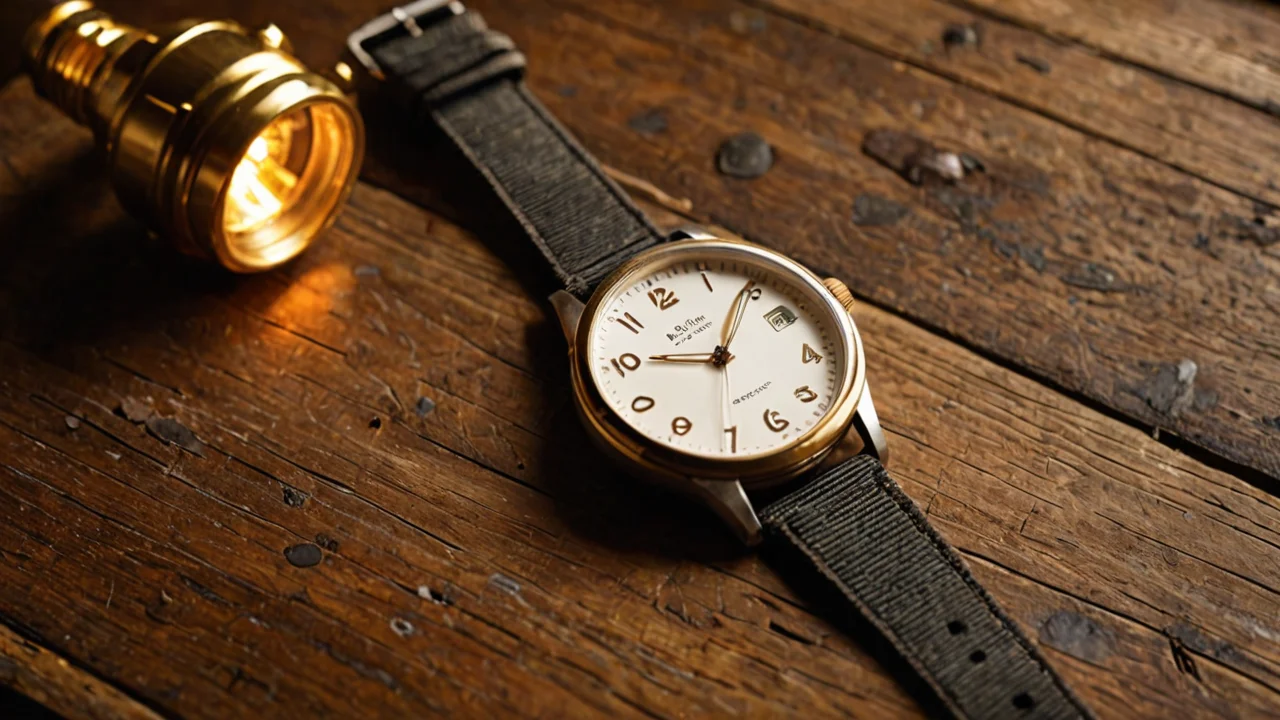
- Woven textile, canvas and nylon. Light, breathable, cheap to replace, and quick to dry. The NATO-style pass-through design is the safest attachment here because the strap threads through both spring bars, so a single bar failure doesn't drop the watch. The cost is bulk under the watch head and a tendency to hold grit and salt until washed.
- Modern synthetics and composites. Engineered to be light and water-tolerant, often with a moulded fit to specific lug widths. They solve the weight and water problem together, but replacement parts can be proprietary and hard to source, which matters when a strap fails years after the watch was bought.
The trade-off is consistent across all five: the more a material tolerates water and sweat, the less it flatters a dress watch, and the more it flatters a dress watch, the faster it degrades in water. Buy for the worst condition the watch regularly sees, not the best.
Fit, lug width and spring bars decide whether any of it works
Lug width is the measurement that matters most and the one most often got wrong. Measure the distance between the inside faces of the lugs in millimetres before ordering anything; a strap a fraction too wide will not seat, and one too narrow will slide and wear the lug holes oval. Straight straps are interchangeable across watches of the same lug width; curved-end straps are moulded to a specific case and rarely transfer.
Spring bar quality is the second decision and it is cheap to get right. Standard bars rely on spring tension against the lug hole; heavier bars with a wider shoulder grip better in holes that have worn. On a watch that sees water, a bar that pops is a lost watch, not a lost strap. The pass-through textile design exists precisely because it removes that single point of failure — the strap loops around both bars, so the watch stays attached even if one bar gives.
Fit at the wrist is the third. A strap should be snug enough that the watch head doesn't rotate but loose enough to slide a finger under the buckle. Too tight and you get sweat pooling under the case and a strap that stretches at the holes; too loose and the watch head swings and knocks against the wrist bone. Leather stretches with wear and should be bought slightly snug; rubber and silicone don't stretch much and should be bought at fit; steel is adjusted by removing links and moving the micro-adjust, which is why a bracelet is the most forgiving of the five to get right after purchase.
Colour, stitching and hardware are the decisions you make last
Once material, width and fit are settled, the remaining choices are aesthetic and they are the ones most likely to be regretted. Contrast stitching reads as casual and shows dirt faster than tonal stitching. A polished buckle draws the eye to the underside of the wrist and scratches visibly within weeks; a brushed or bead-blasted buckle hides the same wear. Quick-release pins are convenient for swapping but are one more small mechanism to fail, and on a watch that gets wet, a conventional bar with a proper shoulder is the more conservative choice.
Match the hardware finish to the case finish, not to the dial. A brushed case with a polished buckle looks like a replacement part, because it is one. And keep the strap's colour within one step of the case or the dial — a strap that matches neither tends to make the watch head look borrowed.
The honest limit of all this: strap choice is reversible in a way that watch choice isn't, and that is its main virtue. The material decision is the one that costs real money and real lost watches; the colour decision costs neither. Spend your attention accordingly, and replace the strap when it fails rather than trying to rescue it — a strap is a consumable, and treating it as a permanent component is how people end up wearing a cracked leather band on a perfectly good dive watch.
When each material is the wrong choice
Leather is wrong on any watch that will be submerged, and wrong on a daily-worn watch through a hot, humid summer unless you accept a short replacement cycle. Rubber is wrong on a dress watch — it reads casual and the moulded ends rarely sit flush against a slim case. Steel is wrong when weight matters, and wrong on a watch whose lugs are too thin or too short to carry a bracelet without the head flopping. Woven textile is wrong when you need a dressy profile, and wrong under a tight cuff because the pass-through layers add bulk. Proprietary synthetics are wrong when you want to be able to replace the strap cheaply for years.
The question to ask before buying is not which material is best but which failure you can live with. A steel bracelet fails by scratching — cosmetic, slow, and cheap to ignore. A leather strap fails by cracking — structural, fast once it starts, and it takes the watch with it if the crack reaches the spring bar hole. A rubber strap fails by tearing at the lug recess, usually after years of flexing. A textile strap fails by fraying at the buckle, which is visible long before it's dangerous. Rank those against how you actually wear the watch, and the material choice stops being a matter of taste.
| Material | Water and sweat | Main failure mode | Best suited to |
|---|---|---|---|
| Leather | Poor | Cracking at lug end and buckle holes | Dress and casual wear kept dry |
| Rubber / silicone | Good | Tearing at the lug recess | Dive watches, swimming, heavy sweat |
| Steel bracelet | Good | Clasp and link scratching | Daily wear where weight is acceptable |
| Woven textile | Good | Fraying at the buckle | Active wear where a bar failure is a risk |
| Proprietary synthetic | Good | Availability of replacement parts | Specific cases with moulded fitment |
One last thing worth knowing before you buy: the watch's stated rating tells you what the case can take, not what the strap can. A dive watch meeting ISO 6425 has been tested at 125% of its rated depth and, in routine simulated use, at 100 m for an hour a day followed by 3 m for three hours a day. None of that testing includes the strap you fit afterwards. Treat the strap as the part you are responsible for, choose the material for the worst conditions the watch will see, get the lug width and spring bars right, and leave the colour until last.